Ruto Signs Sovereign Wealth Fund Law To Save Kenya’s Oil, Mineral Wealth
Kenya has enacted the Sovereign Wealth Fund Act, creating a legal framework to save and invest part of the country’s petroleum and mineral revenues for future generations while supporting economic stability and strategic national development.
By Our Correspondent
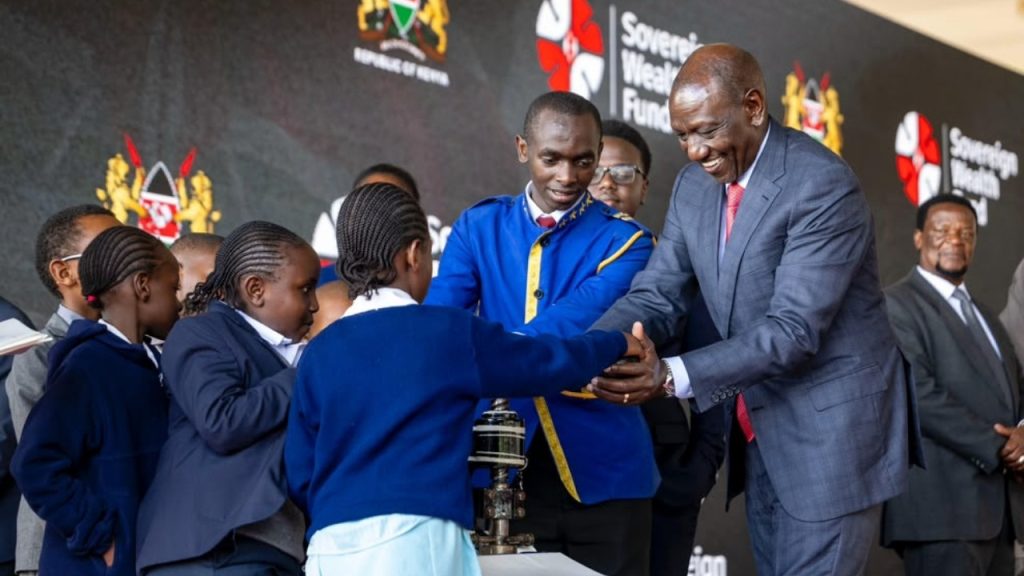
Kenya has moved to shield part of its natural resource wealth from immediate consumption after President William Ruto assented to a law requiring petroleum and mineral revenues to be saved and invested for future generations.
Today, the President signed the Sovereign Wealth Fund Bill, 2026, into law creating a legal framework for preserving proceeds from the country’s petroleum and mineral resources while strengthening economic stability and financing strategic national investments.
The legislation establishes the Sovereign Wealth Fund as a permanent national institution mandated to receive and invest revenues from petroleum and mineral resources, with the government saying it aims to ensure finite natural wealth benefits both current and future generations.
Addressing invited guests during the signing ceremony, President Ruto described the law as a significant shift in how Kenya would manage wealth generated from natural resources after building the foundations for economic growth.
“If the National Infrastructure Fund builds the assets that grow our nation, the Sovereign Wealth Fund preserves and multiplies the wealth the assets create,” President Ruto said.
The President linked the new law to the National Infrastructure Fund established earlier this year, saying the two institutions complement each other by financing development while ensuring wealth generated from those investments is preserved over the long term.
The law gives effect to Article 201(c) of the Constitution, which requires the burdens and benefits arising from the use of public resources and borrowing to be shared equitably between present and future generations.
According to the legislation, revenues from petroleum and mineral resources will capitalise the fund, with 30 per cent allocated to the Future Generations, or Urithi, Fund while the remaining balance will support economic stabilisation and strategic investments.
The fund will comprise three main windows: a Stabilisation Fund to cushion the economy during extraordinary shocks, a Strategic Investment Window supporting priority national investments, and the Future Generations Fund dedicated to long-term savings.
The President said Kenya had chosen to establish the institution before large-scale resource revenues begin flowing, arguing that disciplined governance should precede abundance rather than follow it.
“Every barrel extracted should become an asset that never runs dry,” Ruto said while referring to Kenya’s anticipated oil production from the Lokichar Basin in Turkana.
Kenya has identified petroleum reserves in Turkana County and has also completed what the President described as the country’s first comprehensive nationwide mineral survey, which he said confirmed significant strategic and industrial mineral deposits.
The government argues that properly managed resource revenues could accelerate industrialisation, create jobs, increase exports and strengthen Kenya’s external financial position, although the pace and scale of those benefits will depend on implementation and future production.
During his address, the President cited international examples including Norway, Kuwait, Botswana and Rwanda, saying their sovereign wealth funds demonstrated how countries can transform exhaustible natural resources into long-term financial assets through disciplined investment.
He also referred to Kenya’s experience with titanium mining in Kwale, saying the country had extracted and exported valuable mineral resources without establishing a mechanism to preserve part of the proceeds for future generations.
The Act provides for independent professional management of the fund alongside parliamentary oversight, public reporting and auditing requirements intended to promote transparency and accountability in managing public wealth.
“Every shilling must be accounted for. Every decision must be guided by prudence. Every investment must be measured by the legacy it leaves for future generations,” the President said.
The Sovereign Wealth Fund will belong to the Republic of Kenya rather than any individual administration, according to the law, with investments expected to be managed in accordance with the Constitution and the country’s long-term national interests.
Parliament approved the legislation before it was presented for presidential assent. Details on the timeline for operationalising the fund, appointing its management structures and issuing implementing regulations were not immediately available.
Implementation is expected to focus on establishing the governance framework, appointing professional managers, operationalising oversight mechanisms and preparing the fund to receive future petroleum and mineral revenues in accordance with the new law
About The Author