Mau Restoration Programme Spurs Climate Recovery, Community Growth
The programme targets degraded landscapes through reforestation, agroforestry, and livelihood interventions, aiming to reduce pressure on forest resources while improving resilience and household incomes across the wider Mau complex and surrounding counties.
By Suleiman Mbatiah
The government is scaling up restoration of the Mau Forest Complex by leveraging a national marathon as a mass mobilisation platform, combining conservation, economic empowerment, and youth engagement in one of the country’s most critical water towers.
The initiative, under the Mau Forest Complex Integrated Conservation and Livelihood Improvement Programme, integrates ecological restoration with community-based economic support, positioning sport as a unifying tool to expand outreach and strengthen conservation awareness nationwide.
Officials say the second edition of the Mau Conservation Marathon will deepen partnerships, expand participation, and align environmental messaging with economic opportunities for communities living around the forest ecosystem and dependent on its resources.
The programme targets degraded landscapes through reforestation, agroforestry, and livelihood interventions, aiming to reduce pressure on forest resources while improving resilience and household incomes across the wider Mau complex and surrounding counties.
“This event is not just the commencement of a race, it is a powerful platform for environmental education, conservation awareness, and community empowerment,” said Principal Secretary Festus Ng’eno during the official launch in Nakuru.
Since rollout, restoration efforts have covered about 1,500 hectares, with more than 3,300 hectares mapped, alongside rehabilitation of over 1,200 hectares and planting of more than one million tree seedlings across affected zones.
The PS reported that over 3,150 farmers have received certified seeds, dairy equipment, and tree seedlings, while additional support includes training in high-value crops such as avocado, coffee, and pyrethrum and expansion of beekeeping enterprises.
At county level, Nakuru has complemented national efforts through large-scale greening initiatives, including tree planting across farms, schools, public spaces, and riparian corridors, while strengthening environmental education and climate-smart agriculture programmes.
“This initiative continues to prove, in very practical terms, that conservation and community progress can move forward together,” said Governor Susan Kihika in remarks delivered on her behalf by Deputy Governor David Kones at the launch event.
The PS added that sustainable agriculture, enterprise development, and improved land management practices are central to long-term conservation, with increased participation from youth and women in emerging green economy opportunities across the region.
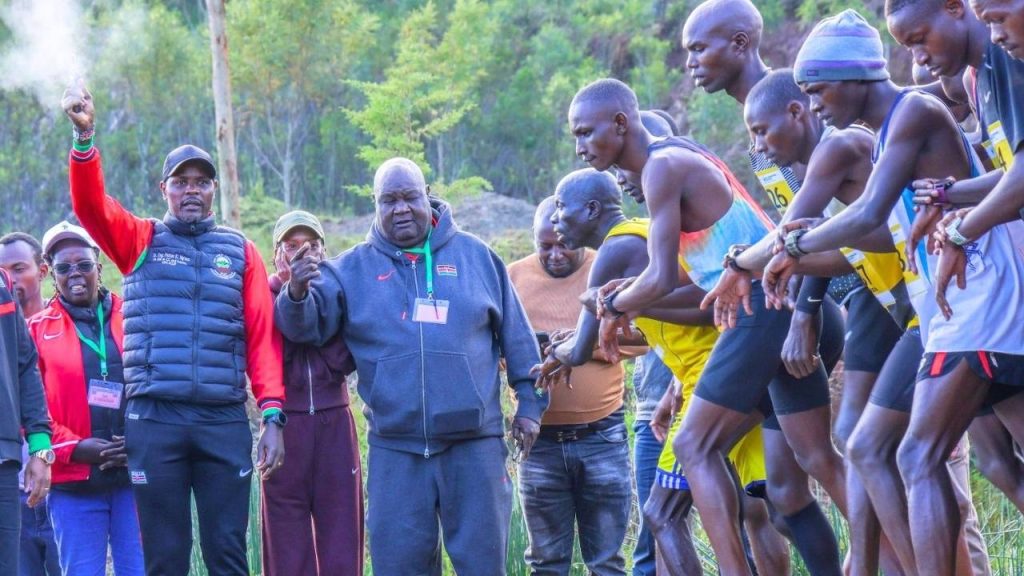
The inaugural marathon in October 2025 attracted more than 1,000 participants, providing a platform for talent exposure while injecting income into youth through structured prize incentives and government-backed rewards.
“Indeed, the platform became an excellent opportunity to showcase their talent and positioned participants for more opportunities,” Ng’eno said, highlighting the role of sport in advancing conservation awareness and economic inclusion.
Organisers have expanded the upcoming edition scheduled for July 3 to include a full 42-kilometre race, with total prize money increased to KES 7.8 million to attract elite athletes and elevate international competitiveness.
“We have planted millions of trees across schools, farms, public spaces, and riparian areas, while strengthening community ownership of restoration efforts,” Kihika said, outlining county contributions to scaling conservation outcomes and partnerships.
Stakeholders emphasised sustained collaboration, noting that continued investment, policy support, and community participation will be critical to securing long-term ecological recovery and protecting the Mau Forest Complex and its dependent ecosystems.
About The Author