Kenya Secures Duty-Free Access to China’s 1.4 Billion-People Market
Previously, Kenyan exports entering China faced tariffs ranging from about 4 percent on flowers to between 10 and 25 percent on fresh produce, limiting competitiveness against countries with preferential or duty-free access.
By Suleiman Mbatiah
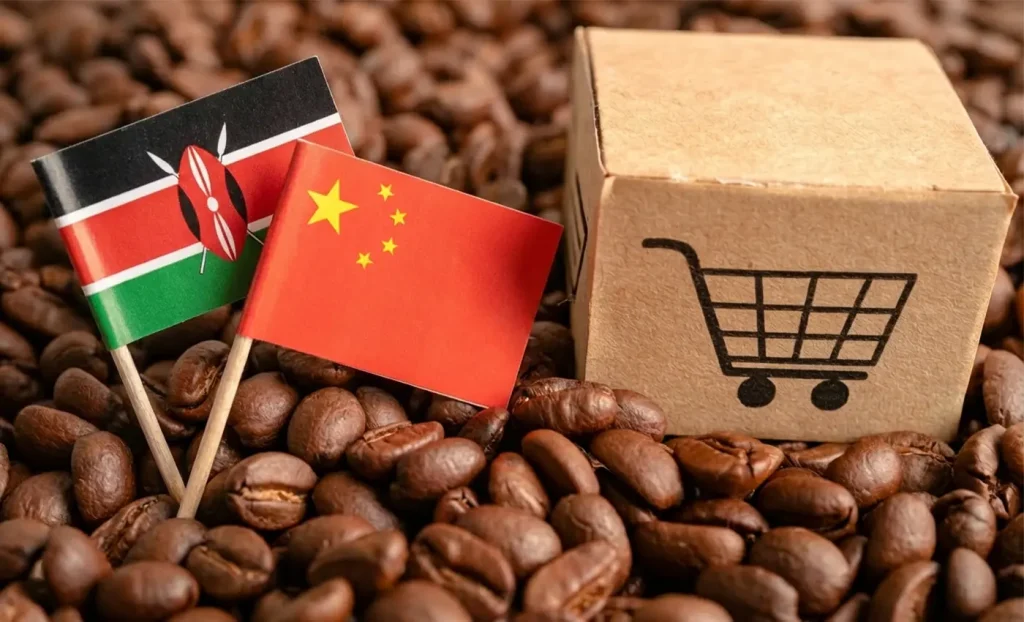
Kenyan exporters are set to gain duty-free access to the Chinese market starting today, May 1, 2026, following a new zero-tariff framework that could unlock nearly all of the country’s export portfolio.
The policy applies to African countries with diplomatic ties to China and is expected to cover about 98.2 percent of Kenya’s exports, creating immediate opportunities for businesses to expand market reach and earnings.
Officials said the arrangement signals a shift in Kenya’s export trajectory, offering firms a chance to penetrate one of the world’s largest consumer markets while strengthening bilateral trade relations between Nairobi and Beijing.
“This marks a decisive new chapter for Kenya’s export growth and presents an immediate opportunity for Kenyan businesses to expand exports, increase earnings, and penetrate one of the world’s largest consumer markets,” said Lee Kinyanjui, Cabinet Secretary for Investments, Trade and Industry.
The rollout follows a preliminary Early Harvest framework announced on January 15, 2026, granting duty-free access to most Kenyan goods while negotiations toward a broader bilateral trade agreement continue between Nairobi and Beijing.
Officials indicated the agreement stems from sustained diplomatic engagements, including President William Ruto’s April 2025 visit to China, where he raised concerns over trade imbalance and secured commitments on tariff removal for key exports.
Previously, Kenyan exports entering China faced tariffs ranging from about 4 percent on flowers to between 10 and 25 percent on fresh produce, limiting competitiveness against countries with preferential or duty-free access.
The removal of these tariffs places Kenyan goods on equal footing within a market of over 1.4 billion consumers, significantly enhancing prospects for agricultural producers and exporters reliant on competitive global pricing structures.
“To fully benefit from the zero-tariff framework, exporters must meet key requirements, including,” the CS said, outlining regulatory steps such as registration, compliance with standards, and proper export documentation.
He explained that exporters must register with Kenyan authorities and China’s customs agency, meet sanitary and phytosanitary requirements, ensure accurate labeling in Chinese, maintain traceability systems, and submit complete shipment documentation.
Government data underscores the urgency of the policy, with Kenya’s trade deficit with China reaching about Sh819.9 billion in 2025, equivalent to USD 5.06 billion, driven by significantly higher import volumes.
Imports from China stood at approximately Sh841.2 billion in 2025, equivalent to USD 5.19 billion, while exports were valued at about Sh21.2 billion, or USD 130.68 million, reflecting a persistent structural imbalance.
Additional statistics show the deficit reached Sh475.6 billion, equivalent to about USD 2.93 billion, in the first nine months of 2025, marking a 16.7 percent increase from Sh407.7 billion recorded in a similar period in 2024.
Authorities said the zero-tariff framework offers a pathway to narrow the deficit by boosting foreign exchange inflows and supporting employment across agriculture, manufacturing, and value-added processing sectors targeting export markets.
Data from Chinese officials shows Kenya exported coffee and tea worth about Sh3.96 billion, equivalent to USD 24.46 million, in 2025, representing a modest but growing share of agricultural trade.
Exports of avocados and macadamia nuts reached approximately Sh3.22 billion, or USD 19.9 million, highlighting steady growth despite remaining small relative to the scale of China’s consumer market.
Analysts note that Kenya’s exports remain largely raw or semi-processed, suggesting the need for deeper structural reforms to increase value addition and improve competitiveness under the expanded market access framework.
Businesses are being urged to act decisively by scaling up production for export markets, investing in value addition and processing, strengthening compliance with international standards, and establishing direct linkages with Chinese buyers.
About The Author