Governor Kihika Urges Swift Completion of Stalled Itare Dam to Solve Water Crisis
President Ruto has on several occasions pledged to revive the dam, blaming its stalling on political interference during the previous administration.
By Suleiman Mbatiah
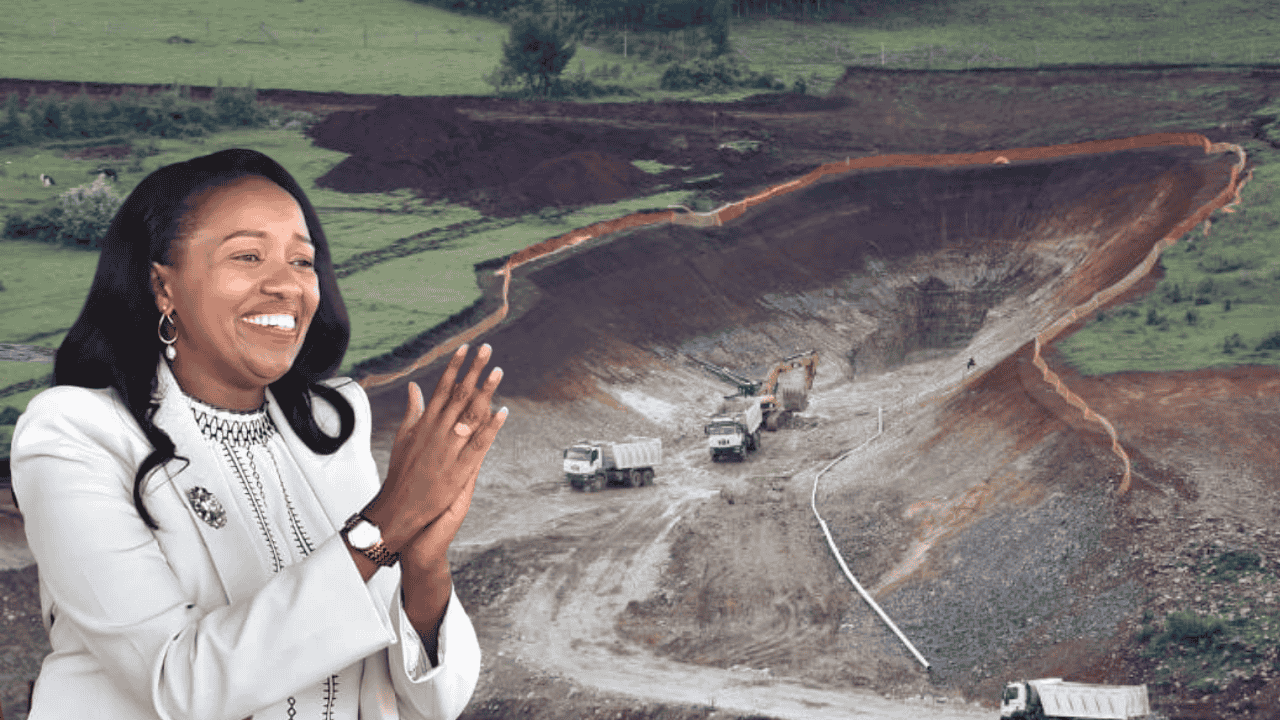
Governor Susan Kihika has renewed her call for the swift resumption of the stalled Itare Dam project in Kuresoi North, calling it essential to ending Nakuru County’s persistent water shortage and meeting the growing population’s demand for clean, safe, and reliable water.
Speaking during a meeting with President William Ruto at State House, Nairobi, Kihika said completing the dam would significantly boost access to clean and reliable water for both urban and rural populations across Nakuru and neighbouring counties.
“Your Excellency, Nakuru is a water-scarce county,” she said, noting the dam would be a game-changer in addressing the county’s daily water deficit, currently estimated at 75,000 cubic meters.
The Itare Dam, located in Ndoinet, was launched in 2015 and was projected to be completed in 2021, as a Vision 2030 flagship project and is designed to supply 100,000 cubic meters of water daily to over one million residents in Nakuru, Molo, Njoro, Rongai, Kuresoi, and parts of Kericho and Baringo counties.
Construction began in 2017 under Italian contractor CMC di Ravenna at an estimated cost of KSh38 billion, funded through loans from Italy’s BNP Paribas and Intesa Sanpaolo banks. The project included a 57-meter-high dam, a water treatment plant, a 113-kilometre pipeline, a 14.5-kilometre transfer tunnel, and upgrades to sewerage and distribution networks.
However, the project stalled in 2018 when the contractor filed for bankruptcy in Italy, leaving the site abandoned and machinery idle. Investigations later revealed that KSh11 billion had already been paid despite the work being incomplete. The dam has since become a symbol of stalled development and unfulfilled promises.
The project has also faced multiple legal challenges, including a lawsuit by activists who argue it poses serious environmental risks and threatens the livelihoods of local communities, raising broader concerns about sustainability, public participation, and compliance with environmental protection laws.
President Ruto has on several occasions pledged to revive the dam, blaming its stalling on political interference during the previous administration. In February 2023, he assured Nakuru residents that construction would resume, and a Cabinet dispatch in April 2024 confirmed a new agreement with CMC di Ravenna to restart the work.
Meanwhile, Governor Kihika said her administration has taken steps to ease the water burden. Since taking office, her administration has drilled over 60 boreholes, solarized 45 of them, constructed 23 water kiosks, protected 13 springs, and laid 407 kilometres of new pipeline. These efforts have connected 15,500 households, about 77,500 people, to clean and safe drinking water.
Early this year, Nakuru County also acquired a state-of-the-art drilling rig expected to reduce borehole drilling costs by 30 percent and boost monthly drilling capacity to over 10 deep wells, reaching depths of 450 meters.
The county has also installed 43 water storage tanks with a combined capacity of 1.58 million litres and is working with Dutch firm Vitens Evides International to curb non-revenue water losses, now at over 50 percent due to leaks, illegal connections, and faulty meters.
Governor Kihika also disclosed plans to expand the Turasha Dam in Gilgil to support supply in Nakuru Town and Gilgil Sub-County. She said the county is preparing for last-mile water connections to rural households once Itare is completed.
Despite notable progress and ongoing interventions, Governor Kihika underscored that the completion of the Itare Dam remains the only viable long-term solution to Nakuru’s water crisis, noting the rising demand for clean, safe, and reliable water for households, institutions, and growing urban populations.
About The Author