Governor Nyong’o Questions Police Role In Tuju Debt Row
He added that the resort to nocturnal operations and coercive displays of state power in matters of a civil nature invites legitimate public concern and scrutiny.
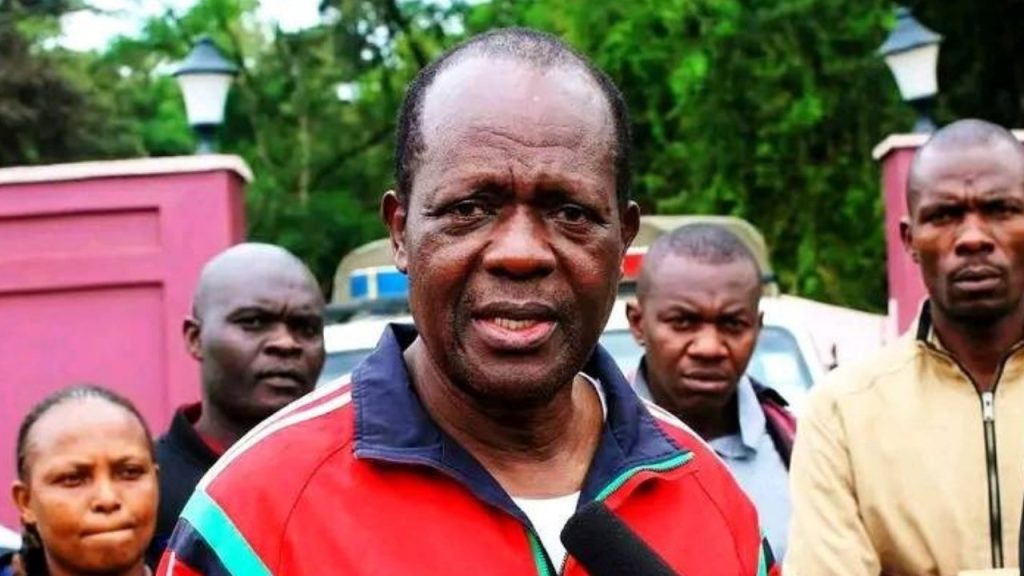
By Suleiman Mbatiah
The handling of Raphael Tuju’s commercial dispute has sparked fresh concerns over the conduct of Kenyan state institutions, with Kisumu Governor Anyang’ Nyong’o calling for strict adherence to the rule of law.
Nyong’o said the involvement of police officers in a matter that falls within civil law raises critical questions about due process and the proper use of state authority in Kenya’s justice system.
In a statement newsrooms, Nyong’o said the recent events surrounding the handling of Tuju’s loan dispute raise serious concerns about institutions mandated to uphold the rule of law.
He noted that Kenya has travelled a long and painful road to build a democratic society grounded in civil liberties and the protection of citizens’ rights and should never be watered down by greed.
“That journey demanded immense sacrifice, including the loss of lives,” Nyong’o said, adding that it becomes deeply concerning when institutions tasked with safeguarding rights appear to undermine the principles they were created to defend.
The governor criticised the use of uniformed police officers to facilitate actions connected to the commercial dispute, noting that their primary responsibility is maintaining law and order rather than enforcing private debt recovery.
According to Nyong’o, debt recovery and commercial disputes are clearly addressed within the framework of civil law and must therefore be handled transparently and through lawful judicial procedures.
“The use of uniformed police officers whose primary duty is to maintain law and order to facilitate actions that seemingly bypass established legal processes is troubling,” Nyong’o said.
He added that the resort to nocturnal operations and coercive displays of state power in matters of a civil nature invites legitimate public concern and scrutiny.
“One must ask: under what legal provision are such actions justified?” Nyong’o posed while urging authorities to ensure that legal procedures are respected in all disputes.
Nyong’o described Tuju as a former senior public servant who has served the country at the highest levels of leadership and contributed significantly to public life.
“Whatever the merits of the commercial dispute at hand, he is neither a fugitive nor a criminal deserving of treatment that subjects him to humiliation or unnecessary public embarrassment,” Nyong’o said.
The governor urged institutions entrusted with public authority to exercise their mandate with restraint, legality and respect for due process in order to maintain public confidence.
He warned that the credibility of Kenya’s institutions, as well as the country’s national reputation and investor confidence, depends largely on their ability to act within the law and with decorum.
Nyong’o said institutions responsible for protecting justice and economic stability must inspire confidence among citizens rather than erode public trust through actions perceived as arbitrary or excessive.
Ultimately, he emphasised that every Kenyan, regardless of status, creed or political inclination, deserves fair and just treatment under the law.
Nyong’o cautioned that the national pledge contained in the anthem, “Haki iwe ngao na mlinzi,” risks becoming merely ceremonial words if justice, fairness and due process are not consistently upheld.
About The Author