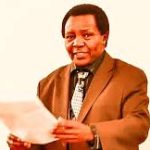
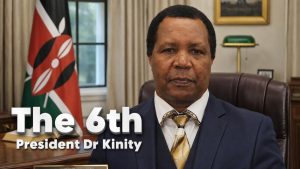
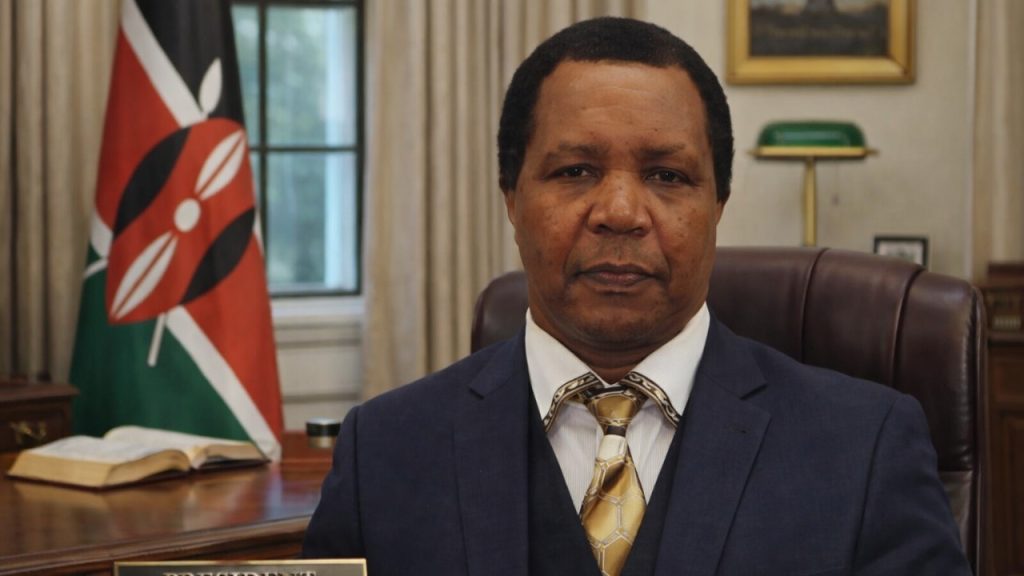
Veteran Governance Activist Dr Isaac Kinity Launches Presidential Bid
By Staff Writer
Former Kenya Civil Servants Union secretary-general, Dr Isaac Newton Kinity has entered the 2027 presidential race, unveiling a platform centred on fighting corruption, lowering the cost of living and expanding social protection.
Dr Kinity announced his candidacy in a formal declaration issued on today, saying Kenya’s long struggle with corruption has blocked meaningful development and left millions of citizens facing poverty, unemployment and rising living costs.
The governance activist said his campaign will focus on strict protection of the 2010 Constitution, restoration of free education for Kenyan children, implementation of universal healthcare and stronger social support programmes for vulnerable groups.
He outlined a broader economic agenda aimed at reducing unemployment and cutting the cost of living by 40 per cent within two years, while ensuring fair pay for Kenyan workers, including members of the Kenya Defence Forces.
The candidate also pledged stronger protection for farmers, businesses and investors against extortion and bribery demands by corrupt officials, while pushing for policies to end unnecessary food imports by boosting local agricultural production.
According to Dr Kinity, corruption remains the root cause of many national challenges, including widespread looting of public funds, abuse of the Constitution, weak public services, high unemployment and growing insecurity across the country.
Other consequences, he said, include struggling health systems, education sector difficulties, rising poverty and allegations of extrajudicial killings, problems he argues cannot be solved without decisive action against corruption in government institutions.
The former union leader promised that if elected president he would launch a determined campaign to eliminate corruption within two years, describing the fight against graft as the foundation for national recovery.
“If Kenyans entrust me with this responsibility and reject corrupt leadership during the 2027 elections, I will eradicate corruption within two years,” Dr Kinity said in the declaration.
He added that failure to achieve that goal within the two-year period would compel him to voluntarily resign from the presidency, a pledge he said demonstrates his commitment to accountability and integrity in public leadership.
Dr Kinity said his decision to seek the presidency follows more than two and a half years of appeals from Kenyan youths, elderly citizens and other groups urging him to offer leadership in the 2027 election.
Initially, he said the requests surprised him because presidential candidates in Kenya have historically emerged through party coalitions rather than direct encouragement from ordinary citizens seeking alternative leadership.
However, after reflecting on the calls from across the country, Dr Kinity said he began to see the appeals as a possible expression of public desire for reform and accountable leadership.
“After careful consideration, I have decided to accept this responsibility,” he said, adding that his decision was guided by a long-standing belief that Kenya has the potential to become a prosperous nation.
Dr Kinity traced his political and governance activism to the early 1980s when he publicly opposed the dissolution of the Kenya Civil Servants Union by the late president Daniel arap Moi through a presidential decree.
His opposition to the move and criticism of corruption in government institutions, he said, placed him at odds with the administration and exposed him to threats during a period when civil servants were often blamed for corruption scandals.
During that time, he said politicians frequently used civil servants as scapegoats to avoid responsibility for looting public funds, a practice he argues entrenched impunity and weakened accountability across government institutions.
Dr Kinity said his fight for transparency and justice placed his life in grave danger, exposing him to numerous threats and several alleged assassination attempts during the height of his activism.
He said the most serious incident occurred on January 7, 1998, when he was poisoned in what he described as an attempt on his life, leaving him with severe health complications.
The poisoning, he said, led to multiple medical problems including eyesight complications, nerve infections, weakness on the right side of his body and infections affecting the kidney, bladder and prostate.
He also suffered a serious head infection that required brain surgery, alongside a significant loss of white blood cells and other complications that required specialised medical treatment outside the country.
Dr Kinity said he later travelled to the United States where he received extensive treatment at Yale New Haven Hospital in Connecticut following the life-threatening poisoning incident.
He left Kenya on December 27, 1998, after learning that unidentified men driving vehicles with foreign registration plates had come to his home in Nakuru two days earlier on Christmas night.
According to Dr Kinity, he was fortunate not to have been at home when the individuals arrived, an incident he said reinforced concerns about threats to his life during the period of political activism.
Despite the challenges and years of health recovery, he said he remained committed to advocating for justice, accountability and democratic governance in Kenya through international forums and reform campaigns.
Dr Kinity noted that he has travelled widely around the world advocating for political reform and good governance in Kenya while participating in international platforms including the International Anti-Corruption Conferences.
Throughout his public life, he said he has remained convinced that Kenya possesses the potential to achieve prosperity if corruption is confronted decisively and public institutions operate within the law.
He argued that entrenched corruption within the political system has prevented the country from implementing a decisive and uncompromising fight against graft since independence in 1963.
Looking ahead to the 2027 election, Dr Kinity said his administration would prioritise rebuilding public trust, protecting constitutional governance and ensuring national resources are used for the benefit of citizens.
If corruption is successfully eliminated within the two-year target period, he said he would dedicate the remainder of his presidential term to strengthening economic growth, stability and social welfare programmes.
Dr Kinity also called on voters to reject what he described as the recycling of corrupt political leaders who return to power using claims of experience and leadership credentials.
“My humble appeal to all Kenyans is simple: reject corrupt leadership, choose integrity, and together we will restore the dignity and prosperity of our nation,” he said.
About The Author