Fear, Loses as Hyena Attacks Rise In Ng’arua
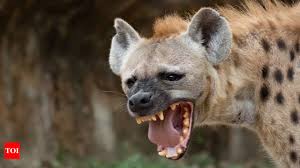
Residents of Ndindika sub-Location in Ng’arua, Laikipia West, are living in fear following a rise in hyena attacks that have killed livestock and raised concerns about human safety.
The community, with schools in session and farmers busy in their fields, fears the animals could soon target people.
On Friday morning, a pack of hyenas raided Kwa Mbatiah, killing and eating two dorper sheep. One of the ewes was heavily pregnant with twins, while the other had given birth just a week earlier.
“It was horrifying to wake up and find both sheep missing—especially knowing one had just lambed and the other was heavily pregnant,” said Suleiman Mbatiah, the owner.
He said the two were hybrid breeds—South African dorper crossed with Maasai dorper—and losing them is a major setback to his efforts to build a quality herd.
Village elder Zachary Njagi confirmed that hyena sightings have become more frequent in recent weeks, with their haunting cries now a common sound in the evenings.
He added that neighboring villages have also reported similar attacks and sightings, suggesting that multiple hyena families may be roaming freely in the area.
“The hyenas may have strayed from the Laikipia Nature Conservancy, about 5 kilometers away, and have now found refuge in nearby thickets and farmlands,” he said
He revealed that he has since written to local schools and churches, urging them to warn residents to stay alert and take precautions against hyena attacks.
The Kenya Wildlife Service (KWS) rangers visited the Kwa Mbatiah homestead on Saturday to assess the damage, in line with the Kenya’s Wildlife Conservation and Management Act, 2013.
Mbatiah appreciated their swift response, stating that no amount of compensation could undo the loss, and that immediate action should focus on trapping or eliminating the hyenas.
Laikipia County is one of Kenya’s leading hotspots for human-wildlife conflict. Hyenas, elephants, and lions are the most reported species involved in conflict with communities.
According to a 2023 report by the Ministry of Tourism and Wildlife, over 1,500 human-wildlife conflict cases were reported nationally, with Laikipia among the top five counties affected.
In recent years, the pressure on wildlife habitats—due to climate change, population growth, and encroachment—has driven wild animals closer to human settlements.
“Over the past 10 years, herders from the Pokot and Samburu communities have invaded the Laikipia Nature Conservancy, destroying the electric fence that once kept wild animals away from the community,” he revealed.
Farmers near conservancies and wildlife corridors often suffer most from these conflicts. Local leaders now urge stronger patrols, faster KWS response, and prompt and enhanced compensation for affected families.
Early last year, President William Ruto launched a compensation scheme covering deaths, injuries, crop damage, predation, and property loss caused by wild animals in six counties affected by human-wildlife conflict.
He revealed that by 2022, compensation claims for 2014 to 2023 totaled KSh7 billion, with the government having paid KSh4 billion so far toward these claims.
About The Author