Pressure Mounts On Kenya To Abolish Death Penalty
In 2023, then Ugunja MP Opiyo Wandayi sponsored the Penal Code (Amendment) Bill seeking to replace the death sentence with life imprisonment under Sections 40(3), 60, 204, 296 and 297 of the Penal Code.
By Suleiman Mbatiah
Pressure is mounting on Kenya to scrap the death penalty, with rights groups calling it outdated and inconsistent with constitutional guarantees and global justice standards.
Although the Supreme Court declared the mandatory nature of the death sentence unconstitutional in the Francis Karioko Muruatetu & another v Republic (2017) case, capital punishment remains in Kenyan law.
In 2023, then Ugunja MP Opiyo Wandayi sponsored the Penal Code (Amendment) Bill seeking to replace the death sentence with life imprisonment under Sections 40(3), 60, 204, 296 and 297 of the Penal Code.
The International Commission of Jurists Kenya said Parliament should pass the amendment to align the law with constitutional protections on fair trial, dignity and the right to life.
Beatrice Monari, a programme consultant at ICJ Kenya, said the country has observed a de facto moratorium on executions for nearly four decades.
“We have been in a de facto moratorium state for four decades now, which begs the question, if there is no one who has been executed, why is this law still in our statute books?” she said.
She urged lawmakers to act, saying the courts had already played their part in affirming constitutional rights.
Monari said about 600 inmates remain on death row, some since 1987, describing the prolonged uncertainty as damaging to their mental health.
“If you are sitting on the death penalty, there is always that what if, when will it happen? That uncertainty affects their mental wellness,” she said.
She added that many of those on death row cannot afford legal representation to pursue appeals or sentence reviews.
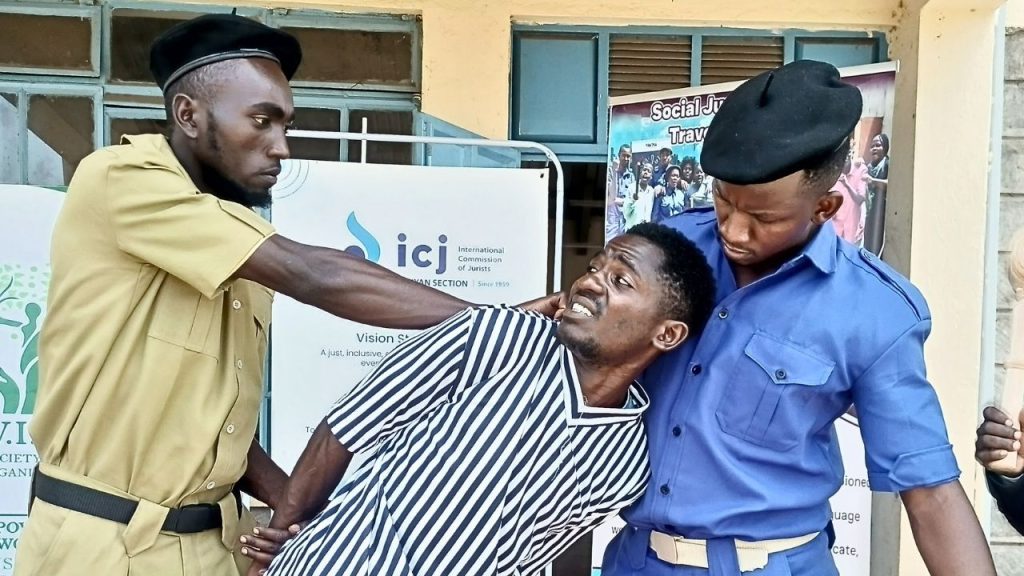
Monari spoke in Nakuru during a community outreach programme where ICJ partnered with the Social Justice Centres Travelling Theatre to stage a play on capital punishment.
The theatre group’s creative director, Anthony Mea, said the play tells the story of an innocent man sentenced to death after being in the wrong place at the wrong time.
“We are trying to use art to highlight these critical issues and to have the community talk about them. Everyone has a right to life. Our Constitution guarantees the right to life and it should not be selective,” he said.
Sophia Hiuhu, chief executive of Women In Society Empowerment, said many youths from Nakuru’s London Estate are serving death sentences at the nearby Nakuru GK Prison.
“Our brothers are in the prisons there anguishing with uncertainty. Youths and families out here too are heavily affected by what next awaits their friends and relatives,” she said.
Last year, the Court of Appeal criticised the legal framework requiring judges to impose the death penalty in certain cases, even where circumstances do not justify it.
A three-judge bench in Nakuru said the sentencing structure results in unequal treatment, with some offenders receiving harsher penalties for lesser crimes.
Justices John Mativo, Mwaniki Gachoka and George Odunga noted that while some convicted murderers receive lesser sentences, those found guilty of robbery with violence must be sentenced to death regardless of whether physical harm was caused.
About The Author