South Sudan Delegation In Kenya On Trade Fact-Finding Mission
The visit underscores Kenya’s position as a regional trade powerhouse and a key logistics hub serving East and Central Africa.
By Suleiman Mbatiah
A delegation from South Sudan is in Kenya on a fact-finding mission to ease the movement of goods through the Northern Corridor, including the Port of Mombasa and the Nairobi Inland Container Depot.
The visit highlights Kenya’s role as a regional trade hub serving East and Central Africa, particularly landlocked countries that depend on its port and transport infrastructure.
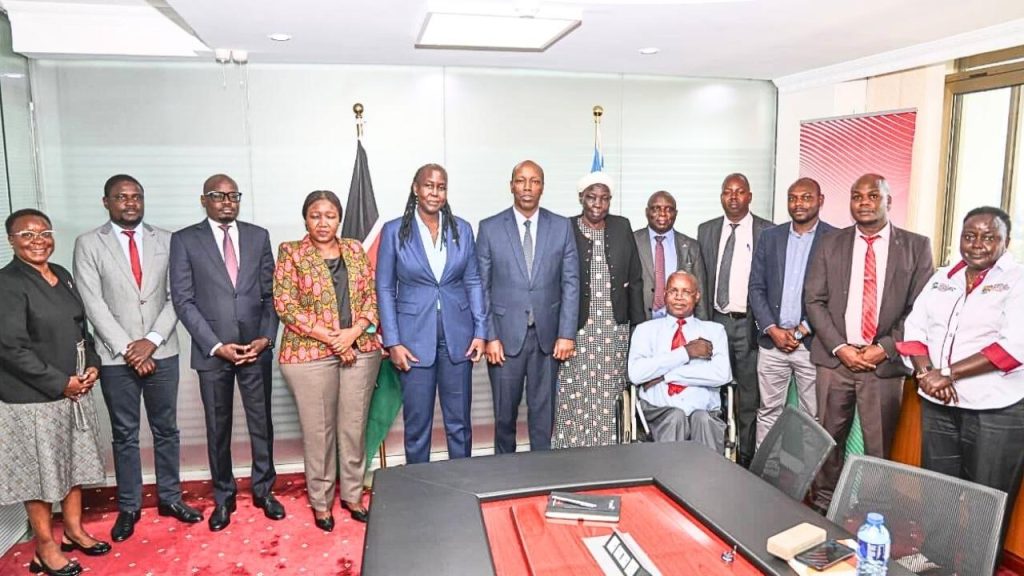
The team, led by South Sudan’s Trade and Industry Minister Atong Kuol Juuk, held bilateral talks in Nairobi with Trade Cabinet Secretary Lee Kinyanjui.
Kinyanjui said Kenya’s port infrastructure and transport network remain central to trade flows across the region and are critical to South Sudan’s imports and exports.
“We welcome the delegation’s fact-finding mission to Kenya, aimed at exploring ways to ease the movement of goods to South Sudan through the Northern Corridor, including the Port of Mombasa and the Nairobi Inland Container Depot,” he said.
The Port of Mombasa is one of the busiest gateways in the region, handling cargo destined for South Sudan, Uganda, Rwanda and parts of eastern Democratic Republic of Congo.
During the visit, the South Sudan delegation toured the Nairobi Inland Container Depot, also known as the Nairobi Dry Port, to assess cargo handling and clearance procedures.
Atong said she sought answers over delays affecting containers bound for South Sudan and pressed for quicker clearance timelines.
“We engaged the management of the Nairobi Inland Container Depot to seek clarification on delays affecting consignments destined for South Sudan and to identify practical solutions,” she said.
She revealed that discussions focused on customs procedures, documentation requirements, logistical coordination and transit processes that could be slowing cargo movement.
The South Sudan delegation called for faster clearance and transfer of containers to reduce storage costs and ease pressure on traders operating between the two countries.
“It is important to expedite the clearance and movement of South Sudan-bound containers to ensure smooth trade flow and to reduce the additional costs incurred by our traders,” she said.
Kinyanjui said the two sides also discussed reducing bottlenecks along the transport corridor to improve efficiency and cut transit times.
He said Kenya and South Sudan are considering forming a Joint Trade Commission to resolve persistent trade barriers and strengthen coordination.
“We discussed the formation of a Joint Trade Commission to address existing bottlenecks that hinder trade. We also acknowledged the challenge of insecurity, which continues to affect the free movement of goods and people,” he said.
The Cabinet Secretary noted that insecurity along parts of the corridor continues to disrupt transport and increase the cost of doing business.
He said Kenya and South Sudan share long-standing ties, particularly in peace support efforts and economic cooperation.
The Ministry of Investments, Trade and Industry pledged support for joint initiatives to streamline customs processes and address border delays affecting traders.
Kenya also committed to knowledge sharing and capacity building in customs administration and trade facilitation to support smoother cross-border operations.
Both ministers said deeper cooperation could unlock new trade opportunities and reinforce Kenya’s position as a gateway for regional commerce, while helping South Sudan secure reliable access to international markets.
About The Author