Media Urged to Champion Rights of Minority, Marginalized Communities
Simplifying complex policies and highlighting government actions, the media empowers citizens with the information needed to actively participate in democratic processes.
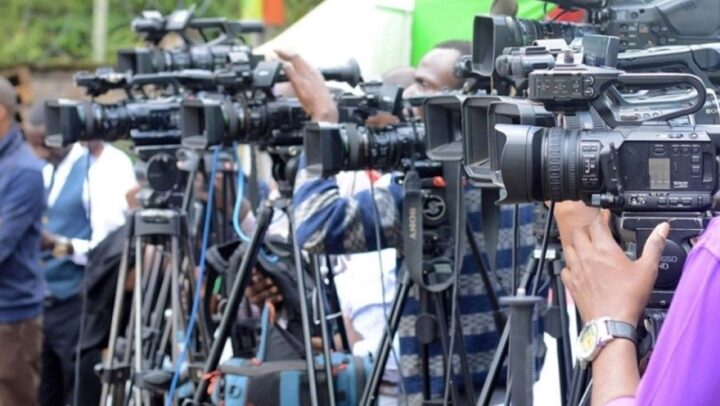
Journalists at work.
The media must play a central role in highlighting and advocating for the rights of marginalized and minority communities by drawing attention to their challenges and pushing for meaningful change.
According to Joseph Mecha, the Nakuru Regional Coordinator of the Media Council of Kenya (MCK), the media is an essential tool in the fight for justice, equity, and equality—especially in an era marked by growing social inequalities.
Mecha was speaking during a one-day workshop aimed at equipping regional journalists with the skills to report on issues affecting marginalized and minority communities through investigative journalism, personal narratives, and community-based stories.
“It is not merely about delivering the news,” he said. “It is a commitment to uphold the principles of non-discrimination and to protect the rights and dignity of those whose stories we tell.”
He urged journalists to approach their work with sensitivity, empathy, and an unwavering dedication to fair and accurate representation in a diverse society.
Nakuru County Commissioner Loyford Kibaara, who officially opened the workshop, emphasized that the responsibility to inform must go hand in hand with the duty to uphold respect and human dignity.
“Moreover, the media plays a critical watchdog role—scrutinizing government efforts to ensure transparency, effectiveness, and accountability, particularly in initiatives targeting vulnerable communities,” he said.
Kibaara noted that by simplifying complex policies and highlighting government actions, the media empowers citizens with the information needed to actively participate in democratic processes.
Lewis Mwaniki, the Nakuru Regional Coordinator of the National Gender and Equality Commission (NGEC), stressed the urgent need for a clear framework defining who qualifies as “minority” or “marginalized” to avoid misuse of the terms.
“Regrettably, some individuals and communities exploit these labels for personal gain, even when they do not meet the criteria,” Mwaniki warned.
Roggers Motoloi, a Programs Officer at the Endorois Indigenous Women Empowerment Network, added that misallocation of resources intended for marginalized groups hampers effective solutions. He urged the media to use investigative reporting to expose impersonation and promote transparency and accountability.
The MCK’s initiative to train journalists on how to report on marginalized and minority communities was praised as a timely move to build the necessary skills for handling such topics with professionalism and sensitivity.
“In an era where information drives public discourse, accuracy, clarity, and strong ethical standards in journalism are more important than ever,” said David Omurunga, a journalist with Milele FM.
About The Author