What Kenya Stands to Gain From Duty-Free Access to the Chinese Market
Imports from China rose more than 14 percent to Ksh489 billion over that period, while exports fell by nearly 31 percent to Ksh13.4 billion, reflecting a narrow product base that has struggled to compete for market share.
By Our Correspondent
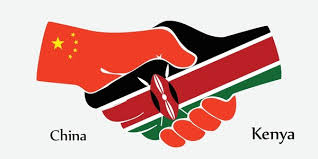
Kenya and China have agreed to a preliminary trade framework that will allow 98.2 percent of Kenyan exports to enter the Chinese market without tariffs, according to a statement from Kenya’s Ministry of Trade. The arrangement forms part of an “early harvest” agreement ahead of broader negotiations on a full bilateral economic partnership.
Trade officials said the deal opens the world’s second-largest economy to key Kenyan goods, particularly agricultural products such as tea, coffee, cut flowers, avocados and seafood. The government expects the changes to strengthen foreign exchange earnings, create jobs, and support diversification of the export base.
Cabinet Secretary Lee Kinyanjui described the agreement as a “monumental progression” in trade relations with China. He said it levels the playing field after years in which Kenya was excluded from Chinese duty-free policies that applied mainly to least developed countries.
Kenya’s trade relationship with China has long been heavily tilted toward imports. Recent statistics from the Kenya National Bureau of Statistics show the trade deficit with China widened to about Ksh475.6 billion in the first nine months of 2025, driven by rising imports of machinery, electronics and industrial inputs and a sharp fall in export earnings.
Imports from China rose more than 14 percent to Ksh489 billion over that period, while exports fell by nearly 31 percent to Ksh13.4 billion, reflecting a narrow product base that has struggled to compete for market share.
This imbalance reflects broader patterns in Kenya’s external trade, where China stands as the top import partner far above other markets. According to trade data, China accounted for a significant share of Kenya’s imported goods while exports remained modest by comparison.
The duty-free access deal is aimed directly at addressing this gap by lowering one of the core barriers Kenyan exporters have faced in China. Analysts say preferential access could raise competitiveness for Kenyan agricultural products, which make up a large share of export potential but have lagged behind in diversification and volumes.
Agriculture is a foundational part of Kenya’s economy. It employs a large share of the workforce and remains one of the country’s top foreign exchange earners, with tea and coffee among its largest export crops.
For years Kenyan growers have pushed to expand their reach into Asian markets. China’s large and growing middle class represents a major opportunity for Kenyan horticultural and processed products. Duty-free access could cut costs for exporters and help make Kenyan produce more competitive against suppliers from other markets.
Yet challenges remain. Exporters will still need to meet China’s regulatory, sanitary and phytosanitary standards. Past experience in other African markets has shown that approvals and compliance can delay shipment volumes even after tariff barriers are removed.
The deal comes at a time of shifting global trade alignments. Washington and Nairobi are also working on extending duty-free access under the African Growth and Opportunity Act (AGOA), which has supported Kenyan apparel, coffee and nuts exports to the United States for more than two decades. Last week the U.S. House of Representatives approved a three-year extension of AGOA, now awaiting Senate approval.
Kenyan officials say there is no conflict between pursuing deeper trade ties with China and strengthening relations with the United States. They argue that diversification across markets will support export resilience and reduce dependence on any single partner.
The early harvest agreement will take effect after technical work on tariff schedules, rules of origin and implementation timelines. If negotiations proceed smoothly, the full bilateral trade pact could offer Kenya unprecedented access to the Chinese market and reduce longstanding structural imbalances.
For Kenyan exporters, the key test will be translating duty-free access into real export growth. That will depend on investment in production capacity, quality control systems, and the ability to navigate complex export procedures to reach Chinese consumers.
About The Author