Ruto Leaves For Washington for Landmark DRC-Rwanda Peace Deal
By Suleiman Mbatiah
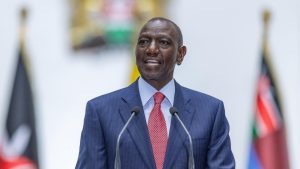
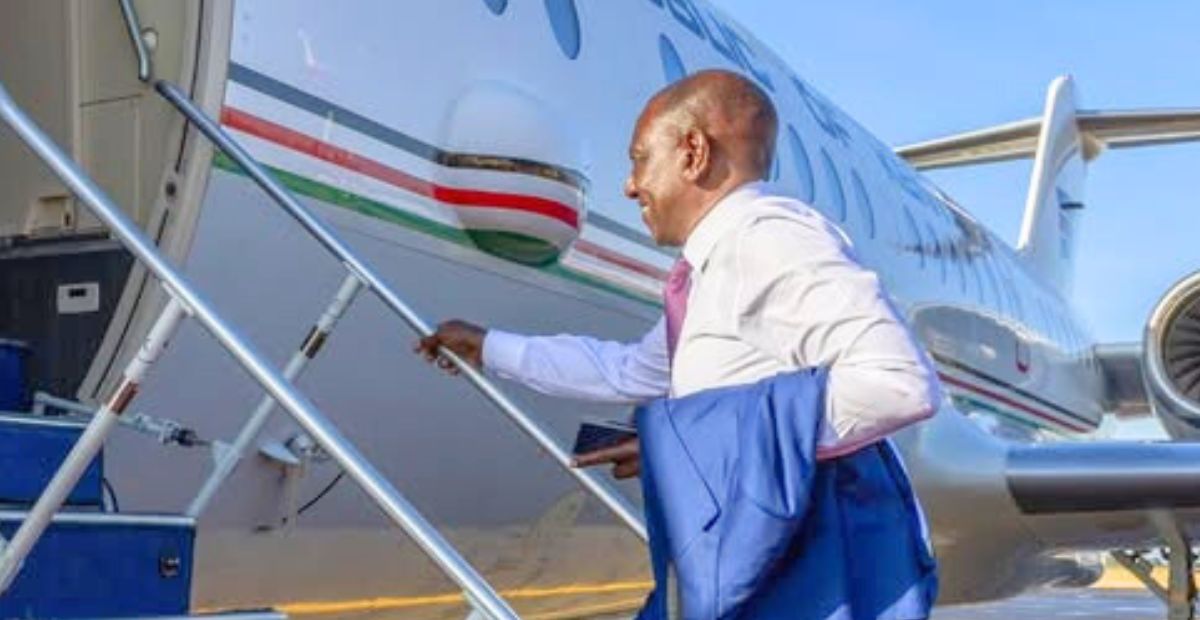
President William Ruto has left the country for Washington D.C., United States, following an invitation from President Donald Trump, the State House Spokesperson Hussein Mohamed has announced in a statement.
He said the trip centers on witnessing the official signing of a landmark peace agreement between the Democratic Republic of Congo (DRC) and Rwanda, a major diplomatic breakthrough aimed at ending decades of instability in the Eastern DRC region.
He is scheduled to join Presidents Paul Kagame of Rwanda and Félix Tshisekedi of the DRC for the signing ceremony, which consolidates peace efforts from the Nairobi and Luanda processes, as well as joint East African Community (EAC) and Southern African Development Community (SADC) initiatives. Former President Uhuru Kenyatta, facilitator of the EAC-led Nairobi Process.
“The Washington signing brings together all key parties and is expected to unlock pathways for disarmament, demobilization, humanitarian access, and long-term stabilization,” the statement read.
The event comes after the foreign ministers of the two African nations signed a preliminary peace agreement and economic pact at a White House event in June. After months of talks, they met in Qatar in November and signed a framework with the ultimate goal of putting an end to years of fighting.
M23 rebels have fought the DRC government in North Kivu province for over a decade, in a conflict with roots in the 1994 Rwandan genocide. The rebels, among more than 100 groups operating in eastern DRC, are made up primarily of ethnic Tutsi, who were targeted by the Hutu in Rwanda.
The group resurged in 2021 with the alleged support of Rwanda. Kigali has denied working directly with the M23, instead saying Rwandan forces have acted in self-defence against the DRC’s military and ethnic Hutu fighters in the porous border region.
Thousands of people, many of them civilians, have been killed in the violence, which surged during an offensive at the beginning of this year that saw the M23 seize two of the DRC’s largest cities.
Beyond the peace deal, President Ruto’s itinerary includes high-level talks focused on advancing Kenya’s strategic interests. Key areas of discussion will cover trade, investment, security, and a significant shift in health cooperation.
The President will witness the signing of the Kenya-U.S. Health Cooperation Framework, which transitions a 25-year partnership into a sustainable, government-led model. The new framework targets the advancement of Universal Health Coverage and the development of a self-reliant health system by 2030.
During his engagements, President Ruto is expected to present Kenya’s ambitious economic transformation agenda, which seeks to elevate the nation towards first-world economic status.
“The plan is anchored on human capital development, infrastructure expansion, agro-industrial growth, and expanded irrigation through extensive dam construction,” read part of the statement.
To realize these goals, the President will actively seek Public-Private Partnership (PPP) investments in these priority sectors, alongside partnerships for enhanced energy security initiatives, to support Kenya’s long-term development aspirations.
About The Author