Kihika to Detail Nakuru’s Progress, Future Plans in State of the County Address

By Suleiman Mbatiah
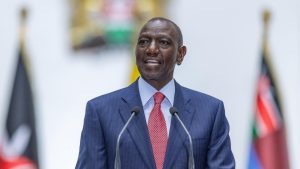
Governor Susan Kihika will tomorrow deliver her third State of the County Address, outlining Nakuru County’s progress, key achievements, ongoing projects, and future priorities as the county moves into the final quarter of the financial year, providing residents with a clear update on her administration’s scorecard.
The address is scheduled for 2pm at the County Assembly of Nakuru’s Ugatuzi Plaza and will be streamed live on the official YouTube channels of both the County Government and the County Assembly. Senior county executives, Members of County Assembly, journalists, and members of the public are expected to attend the address.
The annual briefing is expected to showcase the administration’s performance across key sectors, including health, agriculture, water, infrastructure, education, and governance reforms. It will also provide a platform for the Governor to report on budget implementation, emerging economic pressures, and strategic priorities heading into 2026.
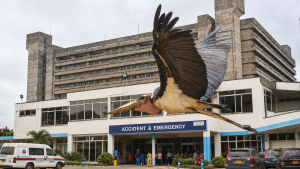
In health, Nakuru has invested heavily in building a people-centred system, allocating 40 percent of the annual budget to healthcare since 2022. The county now operates 16 Primary Care Networks (PCNs) connecting 219 spokes and 391 community units, offering preventive and curative services to over 12,000 residents.
Digital health initiatives have seen 14 facilities across 11 sub-counties adopt electronic medical records, while 93 maternity units, including new and expanded facilities in Kiptangwany, Barut, Mau Narok, Dundori, and Lanet, have improved maternal and child health outcomes. Teenage pregnancies have dropped from 18 to 12 percent, and the reopening of the Bondeni Maternity Theatre, closed since 1958, has brought lifesaving surgeries closer to home.
Agriculture remains a cornerstone of Nakuru’s economy, with the county prioritizing key value chains such as pyrethrum, coffee, avocado, and edible oils. Initiatives include distributing 34.5 million pyrethrum seedlings worth Sh146 million to 11,000 farmers and over 394,000 grafted avocado seedlings valued at Sh131 million to more than 17,000 farmers.
Livestock production has also grown, with 466,800 dairy cattle producing 318 million litres of milk worth Sh13.9 billion in 2024. Ten milk cooling plants, a Sh10 million subsidized artificial insemination program, and 155,267 livestock vaccinations have further strengthened the sector.
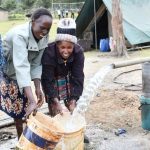
On water and environment, Nakuru has drilled 72 new boreholes, expanded solarized water systems, and built 23 water kiosks, raising clean water coverage from 59.2 percent to 62.3 percent. More than 1.5 million trees have been planted countywide, and 48 climate resilience projects under the FLLoCA program have benefited over 500,000 residents. Waste management improvements include rehabilitating four major disposal sites and installing 30 air quality sensors across the county.
Infrastructure projects under the Imarisha Barabara program continue to enhance connectivity, with 513 km graded, 383 km gravelled, over 10 bridges built, and 206 streetlights installed. Urban roads in Nakuru City, Rhonda, Biashara, and Flamingo are complete, while municipal boards in Gilgil, Naivasha, and Molo have been operationalized, with plans to charter Njoro, Maai Mahiu, and Mau Narok. The county has also completed 605 housing units in Bondeni and 220 in Elburgon, with new projects underway in Bahati and Elburgon.
In education, Nakuru has disbursed Sh952 million in bursaries to over 140,000 students since 2022, expanded ECDE centres from 1,003 to 1,068, and scaled the School Feeding Program to over 65,000 learners. Vocational Training Centres have grown from 33 to 40, serving 5,421 students.
The Governor is also expected to outline priority projects, including bypasses for Nakuru CBD via Lake Nakuru National Park, key road upgrades across Kuresoi, Gilgil, Subukia, Bahati, and Njoro, and the construction of a modular footbridge across Nakuru City’s main highway.
About The Author