Farmers Hail Judgment Safeguarding Community Seed Systems
By Suleiman Mbatiah
Smallholder farmers across the country have welcomed a High Court ruling that struck down punitive sections of the Seed and Plant Varieties Act, clearing the way for communities to freely save, share, and exchange indigenous seeds without fear of arrest or fines. Many described the decision as a long-overdue restoration of their rights and a major boost to food security and cultural heritage.
The ruling, delivered by Justice Rhoda Rutto at the Machakos High Court, declared several sections of the 2012 law unconstitutional. Those provisions had criminalised the use, sale, or exchange of uncertified or unregistered seeds, exposing farmers to fines of up to one million shillings or possible jail time.
For years, farmers argued that the law unfairly favoured large commercial seed companies and placed harsh restrictions on farmers who relied on traditional seed varieties passed down through generations. The petition was filed by 15 smallholder farmers with backing from civil society groups advocating for agroecology, farmer rights, and community seed systems.
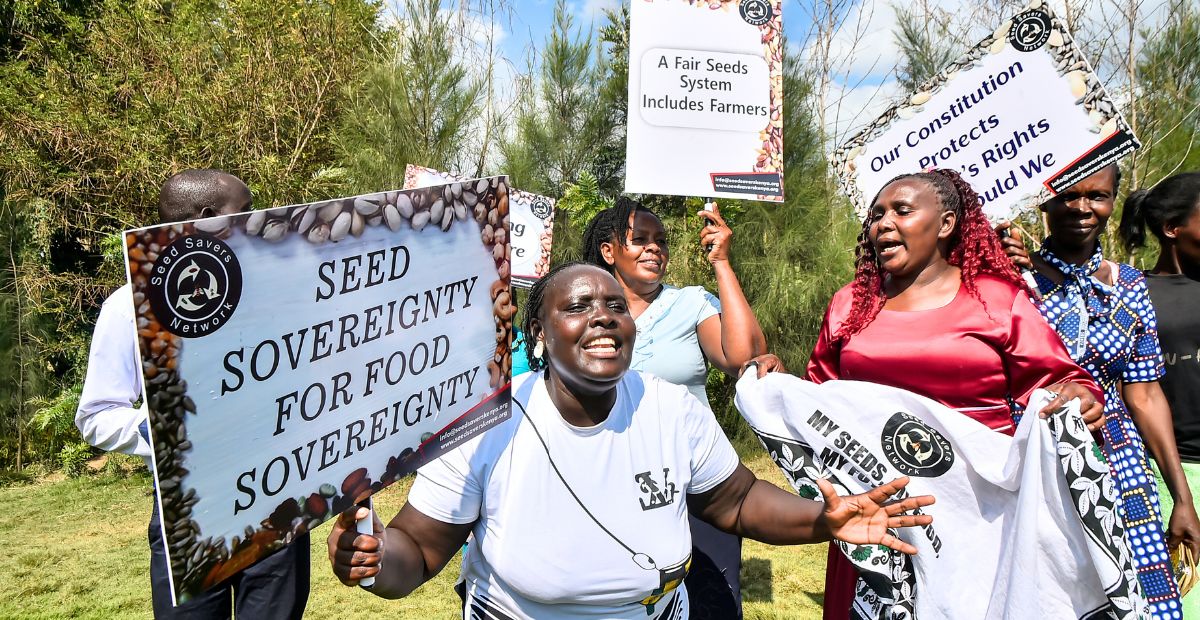
Many farmers followed the judgment in real time. In Nakuru County, at the Seed Savers Network offices in Gilgil, dozens attending a workshop burst into song and dance as the court announced its decision. They said the verdict affirmed the value of indigenous seeds and freed them from what they described as years of fear and uncertainty.
“We now have the right to our indigenous seeds, do research, share and even save our seeds,” said Nancy Karanja of Seed Savers Network while noting that the ruling would “empower farmers at the grassroots” and strengthen indigenous food production.
Justice Rutto found that the criminalisation of seed sharing violated constitutional protections, including the rights to livelihood, culture, and economic freedom. She stressed that Farmer-Managed Seed Systems (FMSS), the traditional networks through which farmers preserve and distribute local seed varieties, are an essential part of community resilience and must be protected by law.
Farmers said the previous law was unfair and harmful to food security, noting it punished seed sharing and weakened community resilience. Wathome added that it pushed smallholders toward costly commercial varieties that often performed poorly in local and drought-prone areas, further undermining their ability to adapt and secure reliable harvests.
“For years, farmers lived as if saving or sharing seeds was a crime. Most of us cannot afford certified seeds sold by corporations. We have always bred and stored our own seeds, yet the law treated us like criminals for supporting each other. Today, that fear has been lifted,” said petitioner Samuel Kioko Wathome from Machakos.
Others said indigenous seeds are not just planting material but cultural assets that carry generations of knowledge. They noted these varieties offer reliability in harsh seasons, helping families cope with climate stress. Protecting them, they argued, strengthens both food security and the identity of communities that depend on traditional farming systems.
“Indigenous seeds are our heritage, they survive droughts, floods and poor soils. Farmers must be free to plant, share and sell these seeds without the threat of fines or jail,” Veronicah Kalondu, a petitioner.
From Gilgil, farmer Beatrice Wangui Mwangi said the ruling would help preserve traditional seeds for generations. She noted that community seed banks and farmer trainings had protected local varieties and that farmers were now confident they could safeguard unique indigenous seeds for the future too.
Civil society groups also celebrated the judgment, calling it a major win for food sovereignty and biodiversity. Greenpeace Africa Food Campaigner Elizabeth Atieno said the ruling “dismantles an unfair monopoly that placed profit above people” and restores farmers’ freedom to grow climate-resilient local varieties.
Environmental experts said the decision strengthens protection for genetic diversity. Gideon Muya of the Biodiversity and Biosafety Association of Kenya called indigenous seeds “the library of life,” adding that the court had defended nature’s heritage from being locked behind commercial patents.
Tabby Munyuri, the Communications and Advocacy Officer at Seed Savers Network Kenya, said the ruling now prompts farmers and rights groups to press the Ministry of Agriculture to revise national seed policies and formally acknowledge farmer-led seed systems as an essential part of the country’s food production landscape.
About The Author